

;)
Most guides to shipping cocoa warn about heat. The bigger threat is something you can’t even see happening.
Cocoa is transported almost entirely by ocean freight, packed in breathable jute bags or loaded loose into container liners, then shipped from ports in West Africa and South America to processors in Europe and North America. The real risk isn’t the heat, it’s the moisture and temperature swings that build up inside a sealed container over weeks at sea.
That’s the reframe this guide is built around. Cocoa is one of the more demanding commodities to move, grown in the humid tropics but consumed mostly in Europe and North America, so nearly every bean crosses an ocean through exactly the kind of conditions that damage it.
Here’s how cocoa actually gets from farm to processor, why moisture does more damage than temperature ever does, and the packaging and moisture control that keeps a shipment intact along the way.
The Cocoa Supply Chain: From Farm to Port to Processor
Transportation is just one link in a longer chain, and where cocoa comes from shapes how much protection it needs once it’s moving.
Most of the world’s cocoa starts on smallholder farms in West Africa and, to a lesser extent, South America and Southeast Asia. After harvest, farmers ferment and sun-dry the beans on-site, the step that determines how much moisture the beans are carrying before anyone even thinks about a shipping container.
From there, beans typically move through several hands before they reach a port:
- Local collection: beans travel from the farm to a buying station or cooperative, often by truck or motorbike, and sometimes by handcart over rough roads.
- Grading and cleaning: beans are sorted, graded, and cleaned at export warehouses, where moisture content gets checked before beans are approved for export.
- Export port: beans are consolidated, bagged or bulked, and loaded for international shipment.
- Ocean freight: the long leg. Cargo spends anywhere from a couple of weeks to over a month at sea.
- Destination port and processor: beans are unloaded, inspected, and trucked to a grinder or processor, where they’re finally turned into cocoa butter, liquor, or powder.
Every one of those handoffs is a chance for moisture to get in or for temperature to shift, which is exactly why the protection strategy has to start well before the container doors close, not after.
How Cocoa Is Shipped Internationally
Ocean Freight, the Dominant Mode
Cocoa is not air-freighted at any meaningful commercial scale, and it isn’t refrigerated, either. The economics don’t work for a bulk agricultural commodity moving in the volumes cocoa does, so ocean freight in standard shipping containers is effectively the only mode that matters for international cocoa transport. That single fact drives most of what follows: no refrigeration means temperature has to be managed passively, and a multi-week ocean voyage means whatever moisture is in the container at loading has a long time to cause problems.
Jute Bags vs. Bulk (“Mega-Bulk”) Shipping
Cocoa moves in one of two ways. Traditional bagged shipping packs beans into breathable jute or sisal bags, generally in the 60 to 65 kg range, and loads them into a standard container. Bulk (sometimes called “mega-bulk”) shipping skips the bags entirely: beans are blown loose into a container fitted with a liner.
Each has a real tradeoff. Bagged cargo is easier to isolate if something goes wrong, damage or moisture in one bag doesn’t necessarily spread to the rest, which is part of why it’s still preferred for single-origin and specialty lots. Bulk is cheaper to handle at scale and is what most large processors use for volume, but it concentrates the risk: one moisture breach in a bulk liner can affect an entire load of 25 tonnes or more, not just a portion of it.
How Long Cocoa Shipping Takes (and Why Routes Are Getting Longer)
Ocean transit from West Africa to Europe or North America typically runs several weeks. That window has been getting longer, not shorter: global rerouting around conflict-affected regions has pushed transit times up on some lanes by 15 to 20 days, on top of congestion at ports on either end.
That matters for moisture control specifically. Every extra day in transit, or sitting at a congested port, is another day of exposure to temperature and humidity swings. A protection plan sized for the shipping times of a few years ago can fall short once those extra weeks are added back in.
Why Cocoa Is So Hard to Transport: Moisture Is the Real Threat
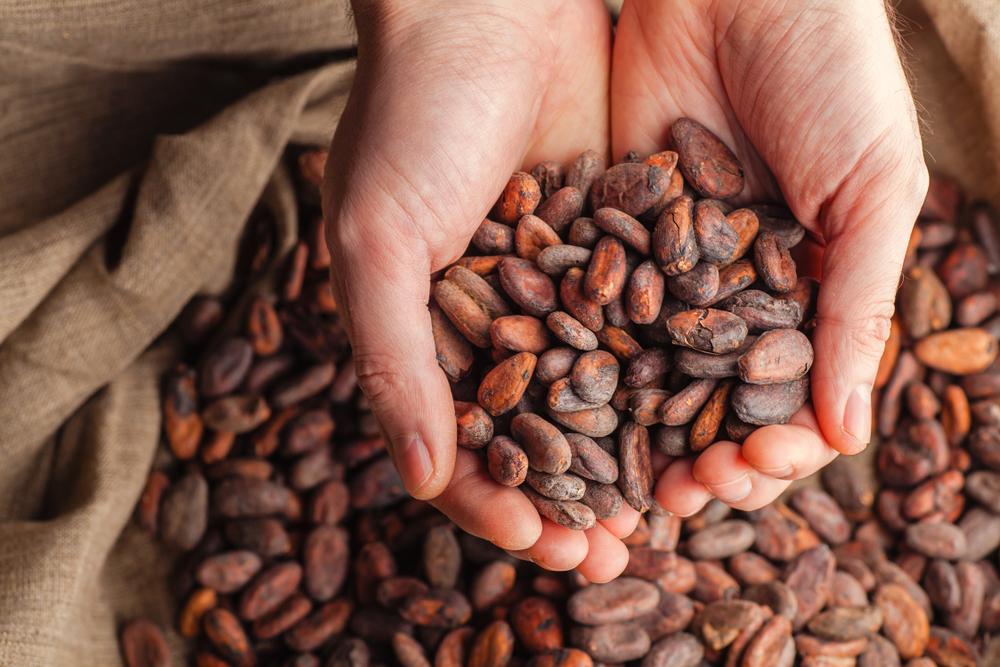
Temperature gets most of the attention in older cocoa-shipping advice, but it’s the wrong villain. The real threat is moisture, and cocoa is particularly bad at defending itself against it.
Cocoa beans are hygroscopic, meaning they constantly trade moisture with the air around them, absorbing it when the surrounding air is humid and releasing it when conditions dry out. The beans behave like a sponge for the entire voyage, not a sealed, inert cargo.
That’s exactly why moisture content before loading matters so much. Beans need to be dried to below roughly 8% moisture before they’re safe to ship or store. Above that threshold, the risk of mold and secondary fermentation rises, along with free fatty acid (FFA) levels, which degrade flavor and quality even when the cocoa looks fine on the outside.
Here’s the part that most cocoa-shipping content gets backward: the highest-risk window for contamination isn’t actually the ocean crossing. Ochratoxin A, a mycotoxin linked to poor drying, climbs steadily during fermentation, peaks during origin-side drying, and then roughly levels off through storage and transit. In other words, the most dangerous stretch happens before the container doors ever close.
That doesn’t make in-transit protection optional, moisture and temperature swings during shipping can still ruin a well-dried load, but it does mean the packaging and protection covered below are defending cargo that’s already fighting an uphill battle, not creating the risk from scratch.
Container Rain: The #1 Cause of Cocoa Cargo Loss
If there’s one mechanism every exporter shipping cocoa should understand, it’s container rain.
Picture a cold can of soda on a hot day. Pull it from the fridge, set it down, and within minutes the outside is wet, moisture from the warm air condensing on the cold metal. A shipping container does the same thing on a much larger scale. Cocoa typically loads hot and humid, straight from tropical conditions at origin. As the vessel moves into cooler water and climates, the steel walls and roof of the container cool down fast. Warm, humid air inside meets that cold steel and condenses, and it can literally rain inside the container, dripping down onto the cargo below.
What makes container rain especially dangerous is that it’s “silent and non-visible” while it’s happening. There’s no alarm and no obvious sign at the moment of loading. By the time an exporter opens the container at destination, the damage, mold, clumping, quality loss, is already done. That combination of scale and invisibility is exactly why moisture control has to be built into the shipment from the start, not treated as a problem to solve after the fact.
How to Protect Cocoa in Transit
Understanding the risk is half the job. Here’s how to actually protect a cocoa shipment from moisture and temperature damage, from loading to delivery.
Dry Beans Below ~8% Moisture Before Loading
This is the single most important step, and it happens before the container is even in the picture. Beans that aren’t sufficiently dried keep releasing moisture for the entire voyage, feeding condensation and mold risk that no amount of downstream packaging can fully offset. Confirming moisture content below roughly 8% before loading is the foundation everything else in this section builds on.
Use Breathable Packaging, Not Airtight
This is worth stating plainly because it corrects common advice: cocoa should not be sealed airtight. Jute bags are breathable by design, and that’s the point, cocoa is hygroscopic and needs to release moisture rather than trap it against the beans.
Sealing cocoa into airtight or plastic packaging without active moisture control traps humid air against the cargo and speeds up sweating and mold. Even materials that seem protective can work against you here: shrink wrap, for example, can trap moisture rather than keep it out.
If a sealed bulk liner is used, pair it with active moisture control, like a desiccant, or a purpose-built hermetic system. Breathable packaging plus active moisture control beats an airtight seal every time.
Prepare the Container Itself
The container is part of the packaging, not just a box around it. Before cocoa goes in, it needs to be clean, dry, and odor-free, cocoa readily absorbs smells from chemicals, fuel, or a prior cargo, and structurally sound, with no roof or door leaks. Kraft-paper lining and floor dunnage help manage residual moisture, and ventilation can help in the right situations, though it’s situational, not a fix on its own.
Control Moisture With Desiccants
Desiccants work throughout the voyage, continuously pulling water vapor out of the air so there’s less moisture available to condense as conditions shift.
Our Hybag desiccant line dehumidifies the container by removing water vapor from the air inside the space, absorbing anywhere from 100% to 300% of its own weight over the course of a shipment. Bags typically hang from a container’s built-in hooks or lay directly over the cargo, depending on the application.
There’s no single desiccant quantity that works for every shipment. Sizing depends on the specific cargo, the transit time, and the route, which is exactly why we calculate it per shipment rather than applying a generic rule of thumb.
Stabilize Temperature on High-Risk Routes
Moisture control and temperature control solve different problems. Desiccants and absorbent products like Hyblanket pull existing humidity out of the air. Temperature stabilization limits how far conditions swing over the course of the voyage, and our Temcore thermal insulation is built for cold-chain needs and shorter hauls where that matters most.
Reefer (refrigerated container) costs have roughly doubled over the past year, so more shippers want passive moisture and temperature protection instead of paying for refrigeration that a non-refrigerated commodity like cocoa doesn’t need in the first place. On high-risk lanes, that usually means combining thermal insulation with active moisture control rather than choosing one or the other.
Request a Solution Assessment for Your Cocoa Shipments
Every cocoa lane has different routes, seasons, and container conditions. Tell us about your shipment, and we’ll design a custom-tailored moisture and temperature protection plan built around it.
What’s Changing in Cocoa Logistics in 2026
New EU Deforestation Rules (EUDR)
Cocoa is squarely in scope of the EU Deforestation Regulation, and the compliance timeline has shifted again. The rule has been delayed twice since it was first introduced. Under the current timeline, large and standard operators, plus all downstream operators, must comply by December 30, 2026, and micro and small operators have until June 30, 2027.
There’s also a real reduction in paperwork: downstream operators and traders no longer have to independently verify upstream due diligence or file their own Due Diligence Statement, only the first downstream operator has to collect it.
A lot of what’s published online still cites the original 2025/2026 dates, which are no longer accurate. If you’re exporting cocoa into the EU, or working with partners who are, the dates above are the ones that matter now.
Price Volatility and Supply Pressure
Cocoa pricing has been unusually volatile, which shapes how much shippers are willing to spend on protection. Cocoa futures hit $10,092 per metric ton on December 6, 2024, while U.S. port stockpiles fell roughly 52% from the year before, their lowest level since 2004.
A major driver has been Cacao Swollen Shoot Virus, a mealybug-transmitted disease that damages yields within a year of infection and can kill host trees within a few years, spreading aggressively across West African growing regions. (These figures reflect a December 2024 snapshot, current pricing is worth confirming separately rather than assuming these numbers still hold.)
Traceability and Real-Time Monitoring
Cocoa traceability has come a long way from a decade ago, when the industry’s shift toward bulk shipping was already raising concerns about losing track of origin once beans left the farm. Today, the direction is toward mandatory digital “first-mile” tracing, now standard under Fairtrade’s certification requirements, tracing beans back to the individual farmer’s field rather than just a country of origin, alongside growing use of in-transit IoT monitoring for temperature, humidity, and container door events. It’s a trend worth watching rather than a solved problem: most downstream buyers still rely on documentary tracing rather than tracking the physical beans all the way through.
How Eurolog Packing Group Protects Cocoa Shipments
Every cocoa shipment we handle comes down to the same three risks: moisture, temperature swings, and time in transit. Our approach is to match a custom-tailored combination of Hybag desiccants, Hyblanket and absorbent pads, and Temcore thermal insulation to the specific route, season, container type, and cargo, rather than defaulting to a one-size-fits-all setup.
That approach has held up across some genuinely demanding lanes. We’ve protected cacao shipments moving from West Africa to both the United States and Europe, the exact route and commodity this guide is about, along with everything from humanitarian aid shipments to fine art.
With 15+ years in export protection, 150+ clients worldwide, and a track record of 100% satisfaction, we build a plan around your shipment rather than asking your shipment to fit our product line. Learn more about our food and beverage export protection, or reach out to talk through your specific route.

Frequently Asked Questions
Is cocoa shipped in refrigerated containers?
No. Cocoa is almost always shipped in standard or ventilated dry containers, not refrigerated ones. The main risk is moisture and condensation, not temperature, so the priority is humidity control and stable conditions rather than cooling.
What is the biggest threat to cocoa during shipping?
Moisture, especially condensation inside the container known as “container rain.” As a ship moves between warm and cold regions, humid air condenses on the cold steel and drips onto the cargo, causing mold, clumping, and quality loss.
Why is cocoa shipped in jute bags instead of plastic?
Cocoa is hygroscopic and needs to breathe. Breathable jute bags let air move around the beans, while airtight plastic can trap humid air and accelerate sweating and mold. When sealed bulk liners are used, they should be paired with active moisture control such as desiccants.
How long does it take to ship cocoa from West Africa?
Ocean transit from West Africa to Europe or North America typically takes several weeks, and can run longer when vessels are rerouted around congested or high-risk regions. Longer transit means more exposure to the temperature and humidity swings that threaten the cargo.
What moisture level is safe for shipping cocoa?
Cocoa beans should be dried to below about 8% moisture before shipping or storage. Above that level, the risk of mold, secondary fermentation, and rising free fatty acids that degrade quality increases significantly.
Request a Solution Assessment for Your Cocoa Shipments
Every cocoa lane has different routes, seasons, and container conditions. Tell us about your shipment, and we’ll design a custom-tailored moisture and temperature protection plan built around it.


