

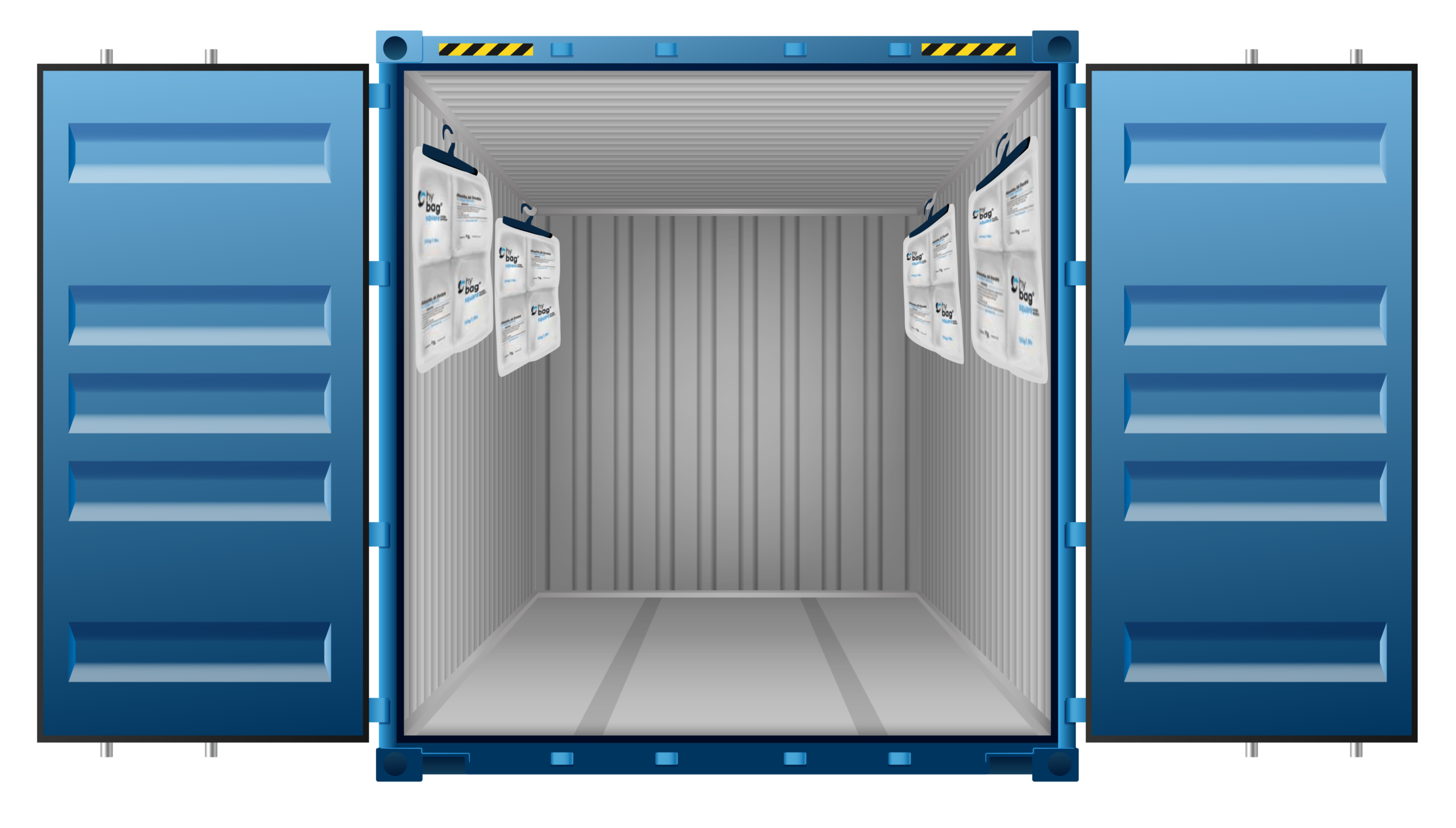
Container desiccant bags hang inside the container and absorb the moisture that causes container rain, condensation and cargo mold. Hybag is EPGNA’s hanging bag: a breathable membrane lets humidity in, and a fast-acting gel formula locks it there.
Moisture damage is one of the leading causes of cargo loss during transportation. Desiccant bags for shipping containers absorb more moisture while taking up less space, which suits shipments of food, pharmaceuticals, textiles and electronics.


High Absorption

Breathable Fabric

Simple Fastening System

Gel Locks Moisture In

Up to 3x Absorption

Enclosed Hook

Moisture bags for containers give you moisture control without using floor space.
Hybag comes in four models. Pick the shape that fits the space and the load.

A versatile bag with a large surface area for maximum moisture absorption. Suited to long-haul shipments.

A flexible strip format that is easy to place along enclosures, container walls or pallets for targeted moisture control.

An environmentally friendly option that absorbs moisture efficiently while reducing environmental impact. It absorbs 100% of its weight and comes in 1.5 kg and 2 kg sizes.

A low-profile bag for tight spaces where vertical clearance is limited.
The breathable membrane lets relative humidity pass through, where it is quickly converted into a stable gel that stays locked in place without leakage. That prevents condensation and protects sensitive cargo from mold, corrosion and packaging degradation. The bag hangs from the container walls and ceiling.
The active material is calcium chloride, which absorbs up to 300% of its weight in moisture. Silica gel absorbs up to 40%, so it takes far more silica to do the same job. A bag acts as a container humidity absorber for the air.
For floor and pallet-level moisture, add moisture absorbent pads. For ceiling condensation over the cargo, add a desiccant blanket. The full HyDry range is covered under shipping container desiccants.

The number of bags depends on four things: container size, how sensitive the cargo is, how long it will be at sea, and whether the cargo holds moisture itself. Wood, paper and cotton do, and they need much more desiccant. Electronics, pharmaceuticals and food need more than plastics and metal.
As a starting point, EPGNA's sizing guide gives 12 to 18 pounds of desiccant for a 20-foot container and 24 to 36 pounds for a 40-foot container.
Have a question? We’re here to help.
Size, use and absorption capacity. Bags are larger and built for industrial-scale moisture control in shipping containers and bulk packaging. Packets are smaller and suit pharmaceuticals, pet food and electronics, where space is limited. Pack is the broader term that covers both, in materials such as silica gel, clay and molecular sieve.
They absorb excess moisture and keep relative humidity low inside the container. High humidity leads to corrosion, mold growth and moisture damage in products such as electronics, pharmaceuticals and industrial equipment. Hybag uses calcium chloride, which holds the moisture as a gel, so it cannot drip or evaporate back onto your cargo.
Hang them from the walls and ceiling of the container before you seal the doors. A fastening system and an enclosed hook hold each bag in place and keep installation and removal simple. Use the Strip model along walls or pallets, and the Flat model where vertical clearance is tight.
Start with container size. EPGNA’s guide gives 12 to 18 pounds of desiccant for a 20-foot container and 24 to 36 pounds for a 40-foot container. Then adjust for cargo sensitivity, time at sea and whether the cargo holds moisture. For a specific bag count, send us your cargo, container size and route, and we will recommend a quantity.
Hybag is made from non-toxic materials, and EPGNA lists it as compliant with FDA regulations. The bags are used on food and pharmaceutical shipments. For a regulated cargo, tell us the product and destination and we will confirm what applies.
