

;)
The world of animal feed is substantially growing, and in the face of rising demand, agricultural exporters are working hard to manage distribution efforts.
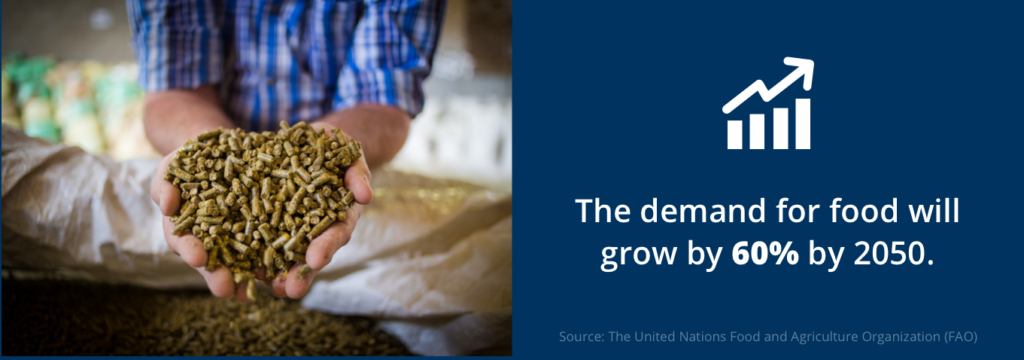
By 2050 the demand for food is expected to grow by 60%, according to the United Nations Food and Agriculture Organization (FAO). Between 2010 and 2050, production of animal proteins is projected to grow by around 1.7% per year.
With the world clamoring for animal proteins, exporters are tasked with ensuring their goods make it to their clients safely.
Ensuring animal feed arrives at its destination safely while mitigating risk of spoiling is paramount for animal feed providers. To ship animal feed safely from the United States, and protect both your product and your bottom line, it’s important to utilize streamlined transloading services.
Transporting Animal Feed Safely
In recent years, there has been more concern regarding the safe transfer and transport of animal feed, as spoiled feed can serve as a source of a number of infections for farm animals. These infections can lead to human illness, including Salmonella Enterica, Trichinella Spiralis, and Toxoplasma Gondii. Additionally, contamination can result in foods tainted by heavy metals, industrial chemicals, and pesticides.
The rise of these health issues has prompted intensified scrutiny on food safety. However, through the use of innovative technology and streamlined services, careful handling of animal feed helps minimize potential contamination and mitigate quality risks.
Protective packaging and innovative container solutions can help animal feed exporters ship animal feed products of all types in both a timely and sanitary manner.
EPGNA offers several solutions for transporting animal feed, including Hybag desiccant bags and Kratobag liners.
Following Government Regulations While Transporting Animal Feed
In 2016, the FDA implemented the Sanitary Transport of Human and Animal Food Rule, as one of seven laws contained in the Food Safety Modernization Act (FSMA). This 2016 rule requires most businesses involved in feed transportation (carriers, shippers, loaders, and receivers) to follow key regulations. Some of the general requirements of this regulation include:
- Protecting food (human or animal) from contamination from other items in the same shipment
- Protecting food that is not completely enclosed in a shipping container
- Controlling the temperature of food, as necessary
In order to protect your cargo, whether exporting via air, train, or ship, it is important to mitigate the risk of loss, and also a legal requirement. Animal feed must be effectively packaged and protected to prevent spoilage and contamination.

Eurolog Packing Group provides innovative packaging solutions that can keep your international shipment of animal feed from spoilage as a result of changes in temperature and moisture, which is of extreme importance when transporting across land and sea. Additionally, our desiccant bags, Hyblankets, and custom container solutions can help add further protection and mitigate unnecessary loss.
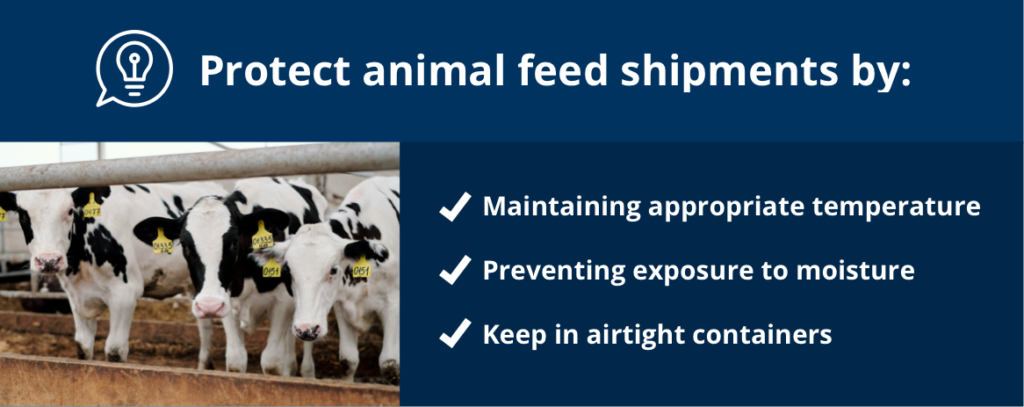
Here’s a quick list of shipping and packaging tips to help you transport animal feed shipment safely:
- Avoid exposure to moisture: When exposed to moisture, animal feed can spoil. Make sure your storage solutions are moisture-resistant, and take every precaution to prevent condensation in your shipping containers.
- Store animal feed in a cool environment: Animal feed may be sensitive to changes in temperature and moisture, so it’s important to store within a dry, cool environment throughout its transport. With insulated shipping containers, you can ensure your animal feed remains in prime condition, and mitigate the risk of excessive heat in transit.
- Keep animal feed in an airtight container. An airtight bag or container can keep your shipment of animal feed dry while transporting. Airtight containers also provide protection from rodents and insects, preventing contamination.
Final Notes
If you’re in the business of transporting animal feed, you want to take every precaution to ensure your product stays safe while in transit. Losing animal feed shipments to contamination, inclement weather, and other factors can decimate your bottom line.
Eurolog Packing Group can help you protect your cargo with cutting-edge transloading service solutions. Contact us today to discover how our shipping processes and innovative products can help you safeguard your investment.


