

;)
Cargo moisture damage is one of the most common problems in international shipping. Learn more about how moisture damage happens, cargo moisture damage cost, and other risks that can affect overseas shipments.
How Common is Moisture Damage in Cargo Shipments?
Cargo moisture damage is a routine occurrence for overseas container shipments. According to industry estimates, approximately 1 in 10 container shipments experience such extensive moisture damage that their cargo has to be discarded. Without systems in place to prevent it, moisture damage is one of the most significant losses an exporter can incur.
Moisture damage happens because of the air trapped inside a sealed shipping container. As the container travels through different climates and temperatures, the air warms and humidifies, then cools and releases its moisture as condensation.
This process causes a phenomenon known as container rain, where water drips from the ceilings and walls of the container onto the cargo below. That moisture is absorbed by the cardboard boxes, wooden pallets, and other natural materials inside the container, which then release it back into the air as temperatures warm again.
This cycle of wetting and drying has plenty of negative impacts. Mold growth, corrosion, staining, and structural damage are all significant risks.
What Does Cargo Moisture Damage Cost?
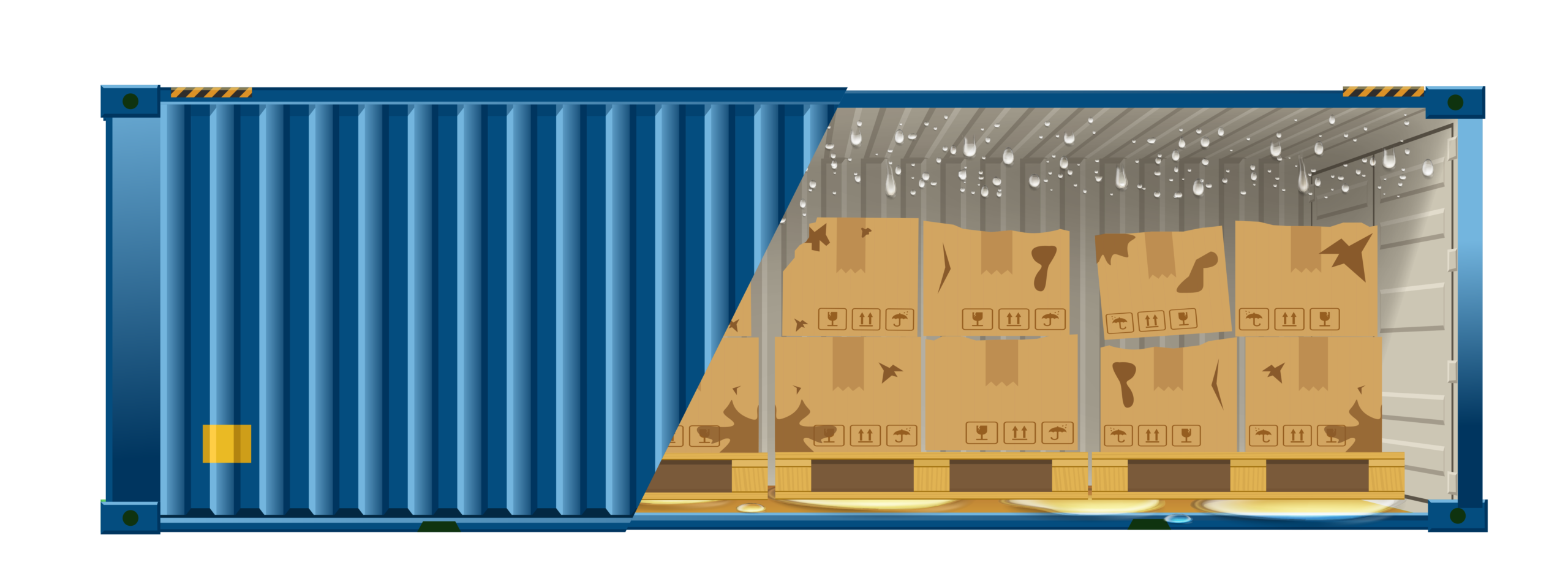
Cargo moisture damage cost can vary greatly depending on the cargo it carries. First, there’s the value of the goods lost. If a container carrying $500,000 in cargo loses 1% of cargo to moisture damage, that’s $5,000 in cost due to unsellable product alone. 1% loss may sound small, but after a year’s worth of shipments those costs can add up. You also need to factor in the cost of the labor spent sorting through damaged goods, decontaminating the container in the case of mold, and the effect on importer and customer relationships.
Other Common Types of Damage to Cargo
Moisture isn’t the only type of cargo damage to be aware of. Temperature swings, contamination, and containment failure are also significant concerns. Each has its own associated cost, and accounting for just one can end in total loss.
Temperature Damage
In order to maintain the correct temperature range for sensitive goods, exporters use refrigerated shipping containers, but temperature damage can still occur. Refrigerated containers can be incorrectly calibrated, containers may not be brought to the correct temperature before loading, and mechanical failures can cause containers to lose refrigeration altogether.
Unfortunately, temperature damage typically isn’t apparent until a container reaches its destination. Temperature damage can mean loss of a portion of goods, or it may mean the entire load is rendered useless.
Contamination Damage
Contamination damage can happen for a number of reasons. In some cases, contamination occurs because a container wasn’t cleaned properly after its previous shipment. In others, sensitive goods can be contaminated by being shipped together with the wrong type of cargo. The bottom line is, contamination doesn’t require physical contact between products. Cargo can pick up an odor or residue without ever touching anything else.
Containment Failure
For many cargo shipments, containment is a serious concern. Dangerous goods like chemicals, gas, and other hazardous substances can spill or leak, threatening workers and the environment. Bulk goods can shift during shipment and risk the structural integrity of the container. Containment failure can result in regulatory compliance concerns, environmental damage, and lost shipments.
Why All Four Risks Matter
While moisture damage is one of the most common risks for cargo shipments, it isn’t the only one. A shipment that’s well-protected from moisture damage can still be lost to temperature failure, contamination, or containment failure. Accounting for only one risk can still jeopardize your cargo.
Prevent Cargo Damage With EPGNA
Protecting your cargo shipment begins with choosing the correct packaging. At EPGNA, our complete line of shipping solutions protects your cargo from moisture, temperature, contamination, and containment issues:
- Moisture control: Discover the Hybag desiccant line, designed to absorb up to three times its own weight in moisture. Protects your cargo from leaks and spills, container rain, and more.
- Temperature stabilization: Our Temcore line includes blankets, liners, and covers that insulate palletized goods or entire containers against heat and cold. These products can hold temperature within 1°F per hour, protecting your goods even in the event of mechanical failure.
- Contamination prevention: Container liners create a physical barrier between your cargo and the interior surface of your shipping container, reducing the chances of contamination. Choose from a hydrophobic, mold-inhibiting liner or a sustainable paper liner.
- Containment: Kratobag bulk container liners are designed to contain dry bulk cargo. They both prevent contamination and make loading and unloading easier, to protect against shifting or spillage.
Most cargo shipments require a combination of protective solutions to ensure their safe arrival. That’s why we’re committed to providing custom solutions to protect your shipments. Contact us today to get started.


