

;)
What is a Desiccant?
A desiccant is a moisture-absorbing material that reduces humidity levels and prevents moisture damage in shipping containers. As cargo travels through different climates and temperatures, humidity levels inside the container fluctuate. Without desiccants, that moisture can cause container rain, corrosion, mold, and other types of damage, which result in significant losses.
Desiccants work by drawing water vapor out of the air and trapping it, therefore lowering the humidity inside a container. They’re made from a range of different materials and come in different forms, from small pouches placed inside packaging to desiccant blankets, bags, and pads.
What is Silica Gel?
Silica gel is made from silicon dioxide. It’s one of the most commonly used desiccant materials, utilized in industries ranging from pharmaceuticals to electronics, food packaging, and more. If you’ve ever opened a package and found a little pouch inside that reads “DO NOT EAT,” you’ve seen silica gel.
Silica gel works through a process known as adsorption. It attracts water molecules from the atmosphere and traps them on its surface. It’s a highly effective solution for low to moderate humidity levels and can perform at a range of different temperatures.
Key Characteristics of Silica Gel
Silica gel is a good choice for moisture-sensitive cargo at moderate humidity levels. That said, it doesn’t have the capacity to protect an entire shipping container, and is better relegated to protection inside packaging. Its key characteristics include:
- Low absorption capacity: Silica gel can absorb just 20-30% of its own weight in moisture.
- Efficient at low humidity levels: Silica gel works efficiently at low humidity levels, typically between 20% and 50% relative humidity.
- Non-toxic: Silica gel can be safely used with food and pharmaceutical products.
- Leakproof: When silica gel absorbs water, it traps it in its gel rather than liquifying. This prevents leaks.
- Reusable: In many applications, silica gel can be dried and reused.
What is Calcium Chloride?
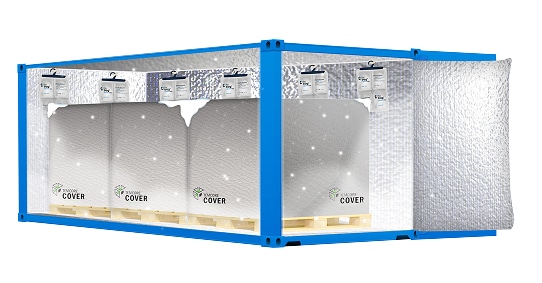
Calcium chloride is a salt-based desiccant with a substantially higher moisture absorption capacity. Many industrial-grade container desiccants are made from calcium chloride, particularly those for longhaul shipments.
Unlike silica gel, calcium chloride absorbs moisture through a chemical process known as deliquescence. It attracts moisture from the atmosphere, then dissolves in that moisture. The resulting liquid is then trapped inside a gel or sealed pouch to prevent leakage.
Key Characteristics of Calcium Chloride
For container shipping, calcium chloride is one of the best desiccants available. It can protect cargo in humid climates, through long transits, or during dramatic temperature swings. Its key characteristics include:
- Very high absorption capacity: Calcium chloride desiccants can absorb many times their weight in moisture.
- Effective at high humidity levels: Calcium chloride remains highly effective when humidity levels exceed 50% relative humidity.
- Leakproof: While calcium chloride liquifies when it comes into contact with moisture, calcium chloride desiccants effectively trap that moisture to prevent leaks.
- Non-reusable: These desiccants can only be used once.
Silica Gel vs. Calcium Chloride Desiccant: Key Differences
When comparing silica gel vs. calcium chloride desiccants, the primary differences come down to absorption capacity, as well as specific use cases.
Absorption Capacity
Calcium chloride has a significantly higher absorption capacity than silica gel. It can absorb several times its weight in moisture, whereas silica gel can only absorb up to half its weight. For humid climates or long transit durations, calcium chloride offers considerably more protection.
Humidity Range
Silica gel performs best at low to moderate humidity levels. Calcium chloride, on the other hand, can handle much higher humidity levels. For shipments traveling through tropical regions or during summer months, calcium chloride is a better choice.
Leakage Risk
Silica gel remains solid, even after absorbing moisture from the atmosphere. As such, it’s inherently safe to use around electronics, food, or pharmaceuticals. Calcium chloride, on the other hand, liquifies as it absorbs. Without proper containment systems, it can put sensitive cargo at risk. Industrial container desiccants must be made with gel formulas or leakproof materials to prevent damage.
Cargo Compatibility
Silica gel is non-toxic and therefore safe to use in direct contact with food, pharmaceuticals, and medical products. It’s the better choice for use inside product packaging. Calcium chloride, on the other hand, is not. It’s well-suited to use outside of packaging.
Cost
While silica gel is the cheaper option pound-for-pound, its low absorption capacity means significantly more is required to protect the same amount of product. In many cases, paying a higher cost for calcium chloride results in savings in the long run.
Which Desiccant is Right for Your Shipment?
Choosing between silica gel vs. calcium chloride desiccant depends on three main factors: anticipated humidity levels, cargo type, and the length of the shipment.
Choose silica gel when:
- Your cargo is moisture-sensitive and needs desiccant protection within packaging.
- Your container is traveling through dry, temperate climates.
- Your shipping route is short.
Choose calcium chloride when:
- You need ambient moisture protection inside the container, rather than inside packaging.
- Your container is traveling through humid climates or large temperature swings are anticipated.
- Your shipping route is long.
EPGNA’s Desiccant Solutions
Choosing the right desiccant material is the first step. Finding the right product to protect your shipment is just as important.
For industrial-grade moisture protection, use EPGNA’s Hybag product line. These calcium chloride desiccants are specifically engineered for container shipping. They’re made with a gel formula that locks moisture in place, preventing leaks or re-evaporation.
Choose from hanging Hybags, which easily attach to existing hooks in your shipping container, Hypad desiccant pads that sit on the container floor, or Hybankets, which provide overhead protection from container rain. Contact us today to find the right moisture control solution for your shipment.


