'/%3E%3Cpath%20fill='%23b2b2b2'%20d='M241%20382q0%2016%2017%2026%2017%2011%2042%2011t42-11q16-11%2017-26V269H241'/%3E%3Cpath%20fill='%239f7e00'%20d='M241%20379q0%2014%208%2023%209%209%2021%209%2014%200%2021-9%209-9%209-23V269h-59'/%3E%3Cpath%20d='M241%20339v-70h59v110q0%2014-9%2023l-6%205v-68h-15v72q-8%200-14-4v-68zm59%2040c0%2022%2015%2032%2029%2032%2021%200%2030-18%2030-32v-40h-59'/%3E%3Cpath%20fill='%239f7e00'%20d='M266%20277v5h2v12h-3v-5h2v-5h-9v5h2v5h-4v9h3v18h-5v10h34v-10h-5v-18h3v-9h-4v-5h2v-5h-9v5h2v5h-3v-12h2v-5zm42%20101q0%2010%206%2017%206%206%2015%207%2010-1%2016-7%206-7%206-17v-29h-43'/%3E%3Ccircle%20fill='%230044ad'%20cx='329.5'%20cy='372'%20r='6'/%3E%3Cellipse%20fill='%230044ad'%20cx='300'%20cy='340'%20rx='16'%20ry='21'/%3E%3C/svg%3E)

;)
Introduction
Studies indicate that about 10% of container shipments suffer from moisture damage, leading to significant economic losses. This issue also results in other consequences such as environmental impact from cargo waste, increased insurance costs, extended claim processing times, and damaged customer relationships. Fortunately, high-quality solutions exist to prevent moisture damage from container condensation.
Understanding Container Moisture
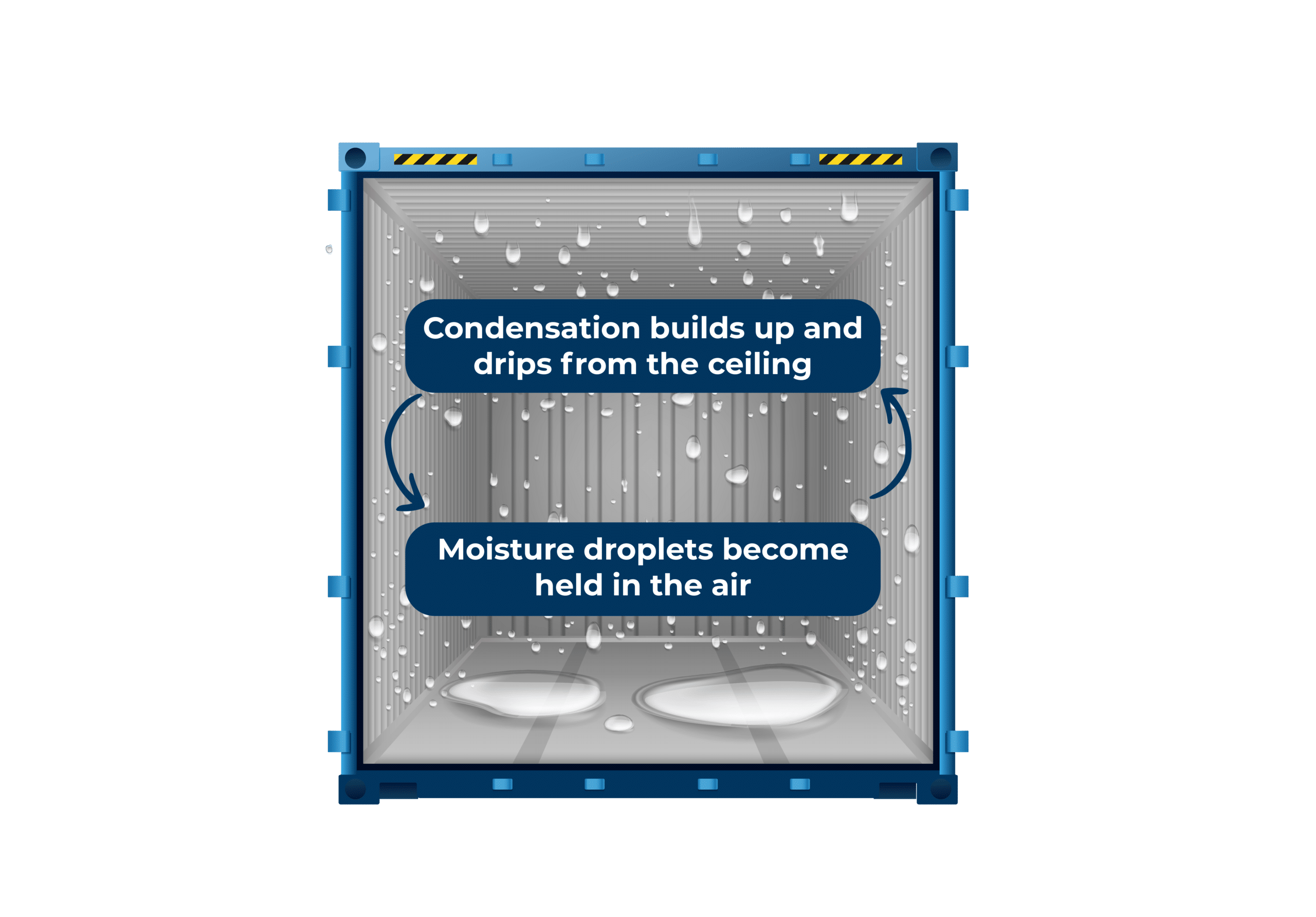
When a container is loaded, it contains moisture from the air, cargo, packaging, goods being shipped, and pallets. As the temperature rises, this moisture evaporates into the air, increasing the relative humidity inside the container. When the temperature drops, the moisture condenses into water drops on cooler surfaces of the container. This evaporation and condensation cycle, known as the container’s condensation cycle, leads to the “rain effect,” where condensation drops fall on the cargo, causing moisture damage. The condensation typically forms on the ceiling and walls of the container.
The Dew Point
The dew point is the temperature at which air moisture condenses into water. It is directly related to relative humidity and is critical in understanding when condensation will occur inside the container. For example, at 25ºC with 70% relative humidity, the dew point is 19ºC. Maintaining temperatures below this point prevents condensation.
Factors Increasing Moisture Risk
- Loading and Unloading Delays: Prolonged exposure to sunlight during these stages increases temperature fluctuations.
- Destination: Shipments crossing different climate zones or equatorial regions have higher condensation risks.
- Load Conditions: High moisture levels in the loading area increase relative humidity inside the container.
- Container Position: Containers exposed to sunlight experience greater temperature variations.
- Weather: Extreme weather conditions during transport affect cargo.
- Type of Goods: Moisture in packaging materials like wooden pallets and cardboard boxes contributes to condensation.
Preventing Condensation
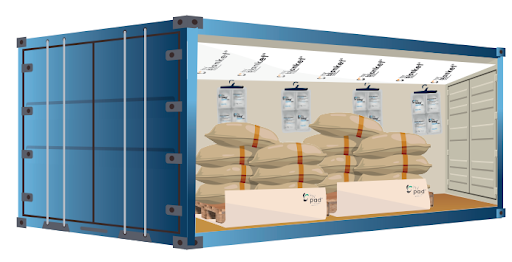
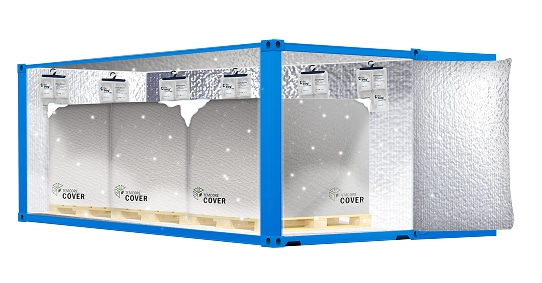
To break the condensation cycle and protect cargo, a combination of solutions is recommended, such as using Hybag Desiccants and condensation-absorbing Hyblankets to combat “container rain.”
Using Desiccants
The absorption capacities of desiccants vary depending on their design and formulation. The Hybag series offers a range of options, with absorption capacities from 100% to 350%. The quantity required per container depends on factors such as container size, weather conditions, transit duration, and the type of packaging used.
Hybag Desiccant Benefits
- Prevents humidity-related damage during transport
- Easy hook-on installation
- Zero leak technology
- Complies with international standards (RoHS, REACH, FDA)
- Reduces packaging and carbon footprint
- Long shelf life (2 years)
- Available in various formats
Pre-Loading Tips
- Inspect container conditions before loading (sweep the floors and check walls for any damage/holes).
- Ensure container door seals are intact.
- Evenly distribute desiccant bags inside the container based on hook location.
- Leave vents open for air flow/circulation.
- Calculate the required desiccant amount based on destination, container type, and cargo type.
- Use a Hyblanket for optimum protection given the risk of excess moisture or “container rain”.

Conclusion
Using a combination of desiccants and absorbent blankets provides comprehensive protection against condensation damage, ensuring that cargo arrives in good condition. Hybags and Hyblankets offer a reliable, economical, and environmentally friendly solution for preventing moisture-related issues during shipping.


