

;)
When shipping goods around the world, moisture is your enemy. Excess moisture in your shipping container can cause mold, damage to products and their packaging, and even damage to the container itself. Proper moisture control may mean the difference between a safe and sound shipment and total loss.
In order to control the level of moisture in your shipping container, it’s essential to use desiccants. These moisture-attracting compounds pull moisture from the atmosphere and trap it there, preventing serious damage.
Read on to learn all about desiccant, including what desiccant is, how it works, and how to choose the best desiccant bags for your shipping container.
What Exactly Is a Desiccant?
Desiccant is a type of material that prevents moisture accumulation by attracting and absorbing excess moisture molecules. Desiccant can be used to reduce humidity in the atmosphere, absorb spills or droplets, and in other ways to lower excess moisture and keep an environment dry.
How Desiccants Work
Desiccants fall into two main categories: physical desiccants and chemical desiccants. The two types of desiccant work as follows:
- Physical desiccant: Physical desiccant works through a process known as adsorption, rather than absorption. These desiccants attract moisture droplets and trap them on their surface.
- Chemical desiccant: Chemical desiccants use a chemical reaction to remove moisture from the atmosphere. In most cases, the reaction transforms the chemical desiccant into a new chemical compound.
Adsorption vs. Absorption: What’s the Difference?
Desiccant and desiccators function thanks to the chemical process known as adsorption, not to be confused with absorption. Most are familiar with absorption; it’s the process through which a sponge soaks up water and holds it inside. During adsorption, on the other hand, the moisture molecules remain on the surface of the desiccant. They never penetrate or absorb into the desiccant.
Common Types of Desiccants
There are a number of different physical and chemical desiccants on the market, each with their own advantages and drawbacks.
Silica Gel
Silica gel desiccant is among the most common desiccants. Silica desiccant bags are often found in consumer goods like apparel, shoes, medications, and more. It’s made from silica, a mineral compound made of oxygen and silicon.
- Adsorption capacity: Silica gel can hold up to 40% of its weight in moisture.
- Temperature range: Silica gel performs best at room temperature, about 77 ºF. As temperatures increase, it becomes less effective, but it generally works as high as 220 ºF.
- Toxicity: Silica gel desiccants are non-toxic.
Clay Desiccant
Clay desiccants like montmorillonite clay and bentonite clay are physical desiccators known for their environmental friendliness. They also tend to be a cost-effective option with broad applications.
- Adsorption capacity: Clay desiccant can absorb up to 30% of its weight in moisture.
- Temperature range: Like silica gel desiccant, clay desiccant bags perform best at room temperature, but can function up to 120 ºF. In higher temps, it becomes dramatically less effective. If a clay desiccant becomes too hot, it may release its moisture back into the atmosphere.
- Toxicity: Clay desiccants are non-toxic.
Molecular Sieve
Molecular sieves are chemical desiccants, commonly made from synthetic materials like aluminum oxide, silicon oxide, and titanium oxide. They are designed to absorb a specific size of molecule, and not larger molecules. Molecular sieve desiccants absorb much more quickly than other types of desiccant.
- Adsorption capacity: Molecular sieves can absorb 20% of their own weight in moisture.
- Temperature range: This is an excellent desiccant for high temps, as it can function well up to 500 ºF.
- Toxicity: Non-toxic, but can cause irritation if inhaled.
Calcium Chloride Desiccant
Calcium chloride is a chemical desiccant that absorbs water in the atmosphere. It’s made of a type of salt known as deliquescent salt, which turns to gel or liquid when it comes into contact with water. It can absorb many times its weight in moisture, but is highly corrosive to metal.
- Adsorption capacity: Calcium chloride desiccant can absorb up to 300% its own weight in moisture.
- Temperature range: This desiccator is effective from just below 0 ºF up to about 200 ºF.
- Toxicity: It isn’t a toxic desiccant, but it can be harmful if ingested.
Why Desiccants are Essential for Shipping Containers

Whether shipping by land or sea, it’s essential to protect your shipment using desiccant bags for shipping containers.
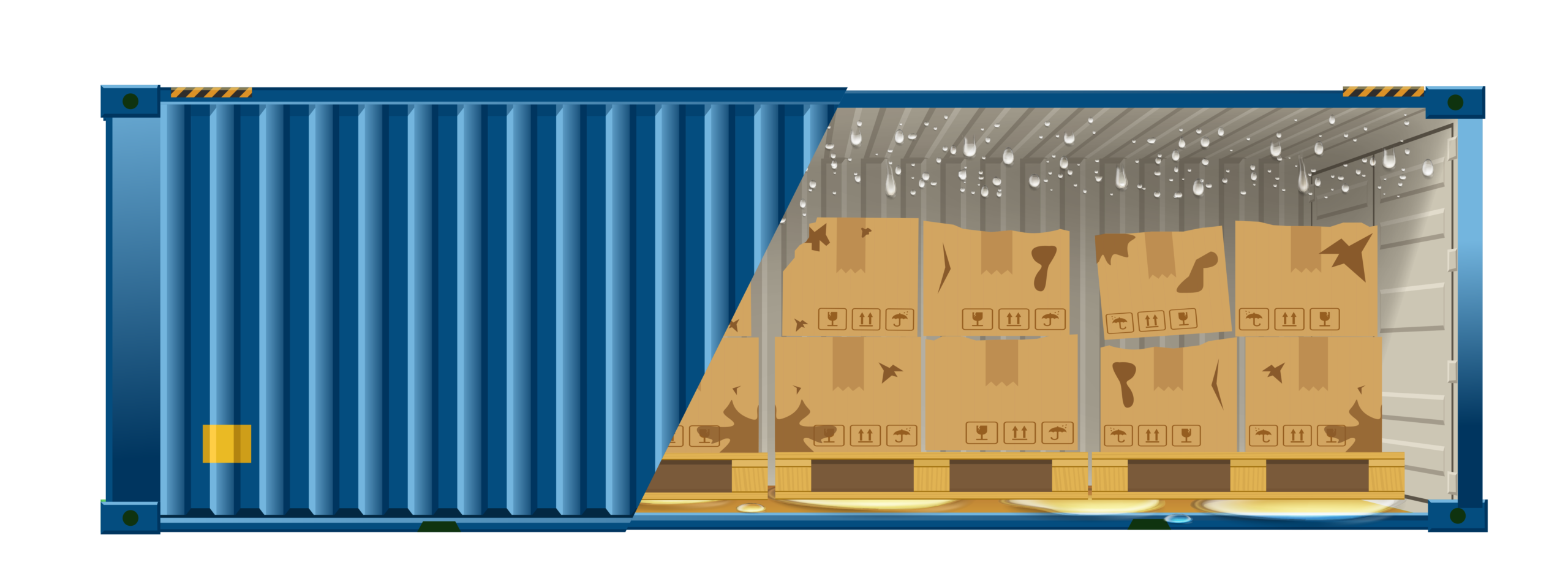
A phenomenon known as container rain is a significant culprit when it comes to moisture in shipping containers. Temperature differences between the external air and air inside your shipping container can cause condensation to form inside your container. Over time, it accumulates on the ceilings and walls and begins to “rain” down, onto your goods.
Moisture can come from your goods, too. Perishable items like fruits and vegetables may release moisture during the ripening process. Packaging materials like paper, textures, and even wood may hold onto moisture and release it throughout its journey.
Excess moisture in your shipping container can cause a host of problems, including mold, mildew, damage to packaging and electrical components, and more. Shipping container desiccant is a smart way to prevent mold and moisture damage and protect your products on their journey. It’s particularly effective when combined with other dehumidification methods, like shipping container ventilation and container liners.
Selecting the Right Type of Desiccant Bags for your Shipping Needs
It’s vital to pair the right desiccant bags with your shipment to ward off moisture damage. When selecting a desiccant, consider these factors:
- Temperature: The temperature inside your shipping container can vary dramatically depending on its route. Studies have shown shipping containers can reach extreme temperatures as cold as -21 ºF and as hot as 135 ºF. Choose a desiccant that works effectively in your container’s anticipated temperature range.
- Moisture sensitivity: Some products, like electronics, are extremely sensitive to moisture. When shipping these, use a shipping container desiccant with a high absorption capacity, like calcium chloride.
- Food safety: Silica gel desiccants are approved for direct contact with food by the FDA. While you shouldn’t expect your desiccant to come into contact with your products, it’s good to be prepared for every scenario.
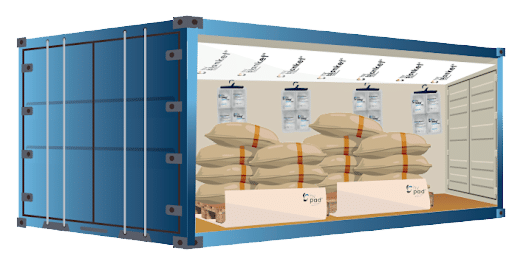
- Construction: Where will your desiccant go in your container? Desiccant bags for shipping containers come in a range of formats, from packets that sit between your products to desiccant bags that hang from the ceiling or desiccant blankets that cover your products and absorb container rain.
There are a few different ways to calculate the amount of shipping container desiccant you’ll need for your journey, but a general rule of thumb is to have 1.2 units of desiccant per cubic foot of air volume in your container.
EPGNA: Your Source for Shipping Container Desiccants and More
For protection of your goods throughout their entire journey, trust EPGNA. Our premium container desiccants defend against humidity, container rain, and excess moisture inside your shipping container. From hanging desiccant bags to desiccant blankets, liners, and more, we offer innovative solutions for every shipment. Ensure your goods arrive safely, thanks to EPGNA.


