

;)
Shipping containers are a staple of international shipping, providing essential protection for a wide variety of goods. Whether you’re shipping a partial container load overseas or exporting dry bulk goods in a full container load, there are a lot of things to consider.
If you want to learn how to transport a shipping container and what you need to know before you get started, we’ve got you covered. Find out everything you need to know to prepare your next shipping container in this guide.
What Does It Mean To Transport A Shipping Container?
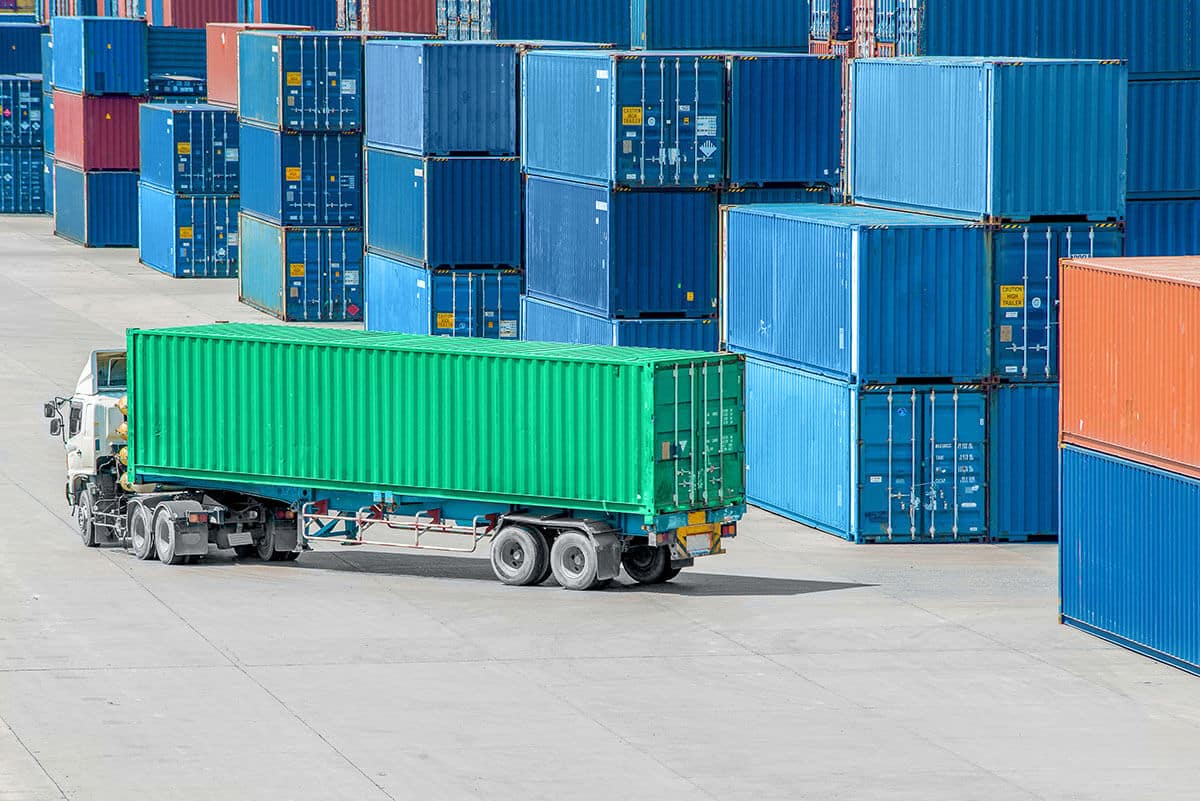
Transporting a shipping container is the act of moving a container from one destination to another. Shipping containers play a key role in supply chain logistics, moving seamlessly between trucks, trains, and ships without the need for unpacking.
Intermodal transport, which involves multiple modes of transportation, is common with shipping containers. These various modes of transport all take place under a single bill of lading, which reduces handling time and the risk of damage.
Shipping containers are picked up for drayage, or short-haul transport to the origin port for handling. Once the container arrives in the destination country, it’s transported via truck or inland rail where the cargo is often handed off to couriers for final delivery.
Why Move a Shipping Container?
Shipping containers are commonly used for on-site storage, including temporary warehousing for machinery or inventory at construction sites, farms, and events.
Modular construction projects integrate containers as living quarters, workshops, or pop-up retail spaces to cut build times and costs.
Shipping containers are also a huge part of international shipping, providing protection for cargo and minimizing its exposure to potential contaminants. Shipping containers are transported internationally via sea and air freight.
Types of Containers Suited for Transport
Standard Dry Van Containers
The most common shipping containers are standard dry van containers, which is the type most people are familiar with. These containers are available in various sizes including 20 ft, 40 ft, and 45 ft with internal payload capacities up to 67,200 lbs for general cargo.
The steel walls inside these containers are resistant to corrosion, and plywood floors provide a flat surface for loading goods. End-wall ventilation minimizes moisture exposure to protect dry goods.
ISO corner fittings connect all four corners of the shipping container for seamless stacking and secure lifting during intermodal transfer.
Refrigerated & Specialized Units (e.g., Maersk reefers, open-top, flat-rack)
Specialized shipping containers are available for specialty cargo or cargo that requires refrigeration.
Refrigerated cargo is stored in reefer containers, which are shipping containers with built-in refrigeration. These containers require power and are capable of maintaining temperatures between -30°C to 30°C, preventing perishables from spoiling.
Open-top containers have removable roof panels that allow you to store over-height machinery, and flat racks collapse for oversized or heavy loads.
When transporting heavy cargo or specialized equipment, you may have to make additional payload adjustments and pay extra handling fees.
Key Transport Methods for Beginners
Road Transport: Flatbed Truck & Container Chassis
For road transport, you can choose between a dedicated container chassis or a flatbed truck with locks for shipping containers. Container locks are inserted into the corner castings and twisted until they lock in place, helping secure shipping containers without a dedicated vehicle. Dedicated container chassis offer a more seamless loading and unloading process.
There are also FMCSA/DOT rules regarding gross vehicle weight ratings, axle loads, and maximum driver hours of service.
In many cases, drivers need to apply for oversized/overweight permits and travel with pilot cars for safety. Drivers also use maps of bridge and road construction to avoid difficult routes.
Rail Freight & Intermodal Shipping
Long-haul rail legs are also an important stage when transporting shipping containers. Railways can efficiently transport several shipping containers at once, making them a more cost-effective and environmentally friendly shipping solution compared to all-road trucking.
There are several major Class I railroads that transport shipping containers, including Union Pacific, BNSF, CSX, and Norfolk Southern. Regional short lines transport containers from these larger railways to intermodal gateways.
CIFFA or BIFA certification may also be required, which comes with an additional fee. Rail ramp delivery is used to transfer containers between trucks and trains.
Sea & Inland Waterway Carriers
Ocean freight starts with booking via a freight forwarder or NVOCC. You’ll need to provide cargo details, select your container type and size, provide shipment information, and choose shipping dates for your cargo. Documents and goods typically have to be delivered at least 24 to 48 hours before the ship’s scheduled departure.
Motor carriers accept and transfer containers under a chassis interchange agreement. Terminal operators manage the storage, handling, and tracking of containers at the port. Terminal handling charges also apply, which can increase shipping costs.
Inland barge services are a cost-effective alternative to ocean freight when you can use major rivers to transport cargo. If there’s a major river connecting the origin and destination port, you can significantly reduce the cost of transporting shipping containers.
Step-by-Step Planning from Start to Finish
Assessing Container Dimensions & Weight Limits
The first thing you need to do is assess your shipping container dimensions and weight limits. Standard ISO dry containers are 7.8 ft wide and 7.9 ft high, and they’re available in either 20 ft or 40 ft lengths.
Generally speaking, a 40 ft container can have a payload of about 67,200 lbs, which is the weight of the cargo without the shipping container’s weight. A 20 ft container has a maximum payload of about 44,000 lbs.
It’s also important to consider container weight when calculating road axle loads, looking at bridge ratings, and obtaining permits.
Securing Permits & Route Surveys
The next step is securing permits from state DOTs or local agencies for over-dimensional loads. Fees and approval lead times can vary depending on the agency you’re applying for a permit through.
Conduct route surveys to check overhead clearances, turning radii, and construction zones. Route surveys play a key role in the planning process.
Selecting & Booking a Qualified Carrier
Verifying Insurance Coverage & Credentials
Confirm carrier liability insurance, cargo coverage limits, and releases of liability to protect against damage, loss, or delay. Check for listed exclusions that may result in rejected claims.
Checking Carrier Equipment (chassis, cranes, forklifts)
Check the carrier’s equipment to make sure they’re using a well-maintained chassis with valid ISO certification, plus lifting gear rated above the weight of your container. Poorly maintained chassis or inadequate equipment can result in cargo damage.
Preparing the Container for Transit
Container Inspection Checklist: Damage, Leaks, Structural Integrity
Perform a thorough inspection of your shipping container to prepare it for transit. Here’s a checklist you can use to make sure you’re conducting a thorough inspection:
- Inspect roofs, walls, floors and doors for corrosion
- Check roofs, walls, floors and doors for dents and punctures
- Look for signs of water intrusion near roofs, walls, floors and doors
- Verify corner castings, door gaskets, and locking bars are fully operational to protect against inclement weather
Cargo Securing Methods: Lashings, Dunnage, Door Seals
Twist-locks, load bars, and ratchet straps can be used to secure your cargo in place inside the shipping container. These cargo securing methods prevent your cargo from shifting around and getting damaged during transit.
Dunnage boards or airbags allow you to fill voids inside the shipping container to keep everything secure. It’s also important to perform a door seal inspection or replacement to prevent contamination.
Loading Procedures & Equipment Requirements
Containers can be loaded via crane lifts or forklifts, and both have their advantages. Cranes are capable of lifting containers to greater heights and larger containers, and the center of gravity of the container should be as low and close to the middle as possible.
Forklifts are more mobile and great for smaller containers. Forklifts can also be used to load cargo inside your shipping container for transit.
Tracking & Monitoring En Route
Once you’ve loaded up your cargo and it’s in transit, you can use GPS trackers or IoT sensors to track the status of your shipment. You can use sensors to receive real-time updates for location, humidity, and shock/vibration alerts.
Set up automated notifications for milestones like pickup, customs clearance, terminal handoff and delivery.
Unloading & Site Placement Best Practices
Prepare a level, compacted pad or foundation with enough weight capacity for your shipping container and cargo. Mark a precise drop-zone layout to guide you through the unloading process.,
Use spreader bars and guide-ropes to settle the container while spotters direct truck positioning.
Common Pitfalls & How to Avoid Them
Overlooking Weight & Dimensional Regulations
Smooth shipping container transportation starts with preparation, so don’t overlook weight and dimensional regulations. Double-check your gross weight against permit allowances to make sure there are no unexpected fees or route detours during the shipping process. In some cases, you may need to split cargo up across two shipping containers if the weight is too high.
Skipping Pre-Transport Container Inspections
Containers need to be inspected before they’re loaded and picked up to prevent cargo spoilage, leaking, or even rejection. Make sure you thoroughly inspect your shipping container to look for signs of corrosion, physical damage, and water intrusion. Inspecting the door seal is also crucial for weatherproofing.
Neglecting Oversize Load Permits
If you’re carrying an oversize load, you need to have an oversize load permit and an escort. Neglecting to obtain these permits can result in costly delays, so find out which permits you need and make sure you have them.
Inadequate Cargo Securing Leading to Damage
Failing to secure your cargo inside the shipping container allows it to shift around during transit, which can lead to expensive cargo damage. Use straps, dunnage boards, and airbags to keep your cargo securely in place.

Frequently Asked Questions
How Much Does It Cost to Transport a Shipping Container?
The cost of transporting a shipping container varies based on the weight and size, shipping method, and shipping distance.
How Long Will the Transport Take?
Shipping containers can be transported in days via air freight, while ocean freight can take weeks to months depending on the destination.
Can I Move a Container Myself or Should I Hire Pros?
It’s best to hire professionals to help you move your shipping container unless you have experience transporting shipping containers.
Which Permits Are Needed for Oversized Loads?
Oversize load permits can be obtained through DOTs and other local agencies who provide road permits. The exact permit you need will vary depending on the location and load size.
What Equipment Do I Need for Loading & Unloading?
Cranes and forklifts are essential equipment for loading, unloading, and transporting shipping containers.
Conclusion: Simplifying Your First Shipping Container Move
Transporting shipping containers is a lot of work, which is why the global shipping industry is so massive. With a little research and effort, you can transport shipping containers all throughout the world.
At Eurolog Packing Group, we develop shipping solutions that make transporting shipping containers easier. Check out our innovative shipping solutions online or contact us to learn about our custom solutions.


